Dune 45 is probably the most famous spot, right along the road in Sossusvlei area. You drive up early, before the heat kicks in, park at the base and climb. Its steep, sand slips with every step, but you keep going because the view from the top is worth it. At sunrise the dunes cast long shadows, ridges sharp against the sky, and everything turns orange and gold. Its quiet up there, just wind whispering and your breathing, makes you feel tiny but in a good way.
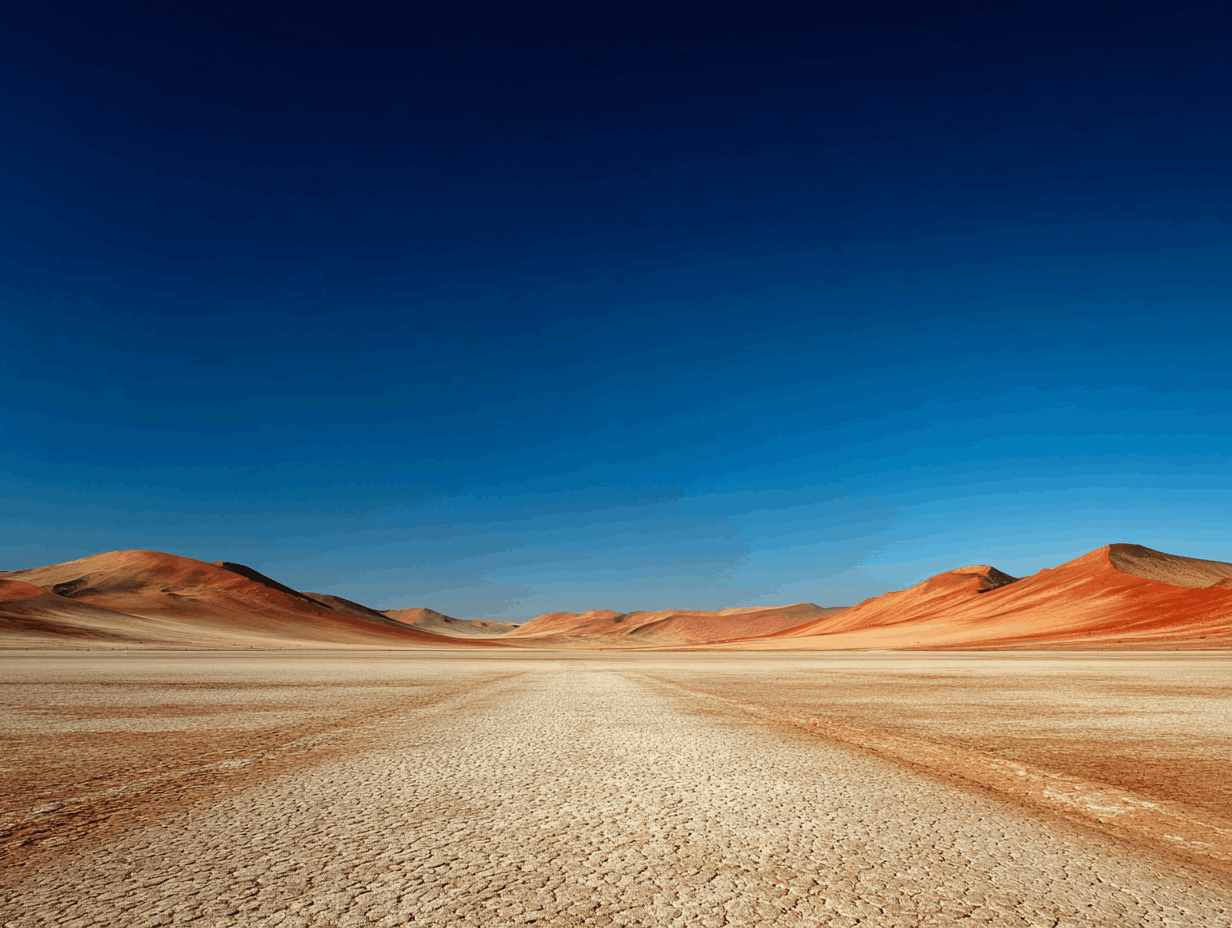
Once youre down, head deeper into the park to Deadvlei. Its this white clay pan surrounded by some of the tallest dunes in the world, dead camel thorn trees sticking out black and twisted, centuries old but preserved because its so dry. The contrast is striking, bright white ground, black skeletons, red sand walls rising around. Walk out across the pan, footprints barely show, its like time stopped here. Early morning or late afternoon light makes the colors pop even more.
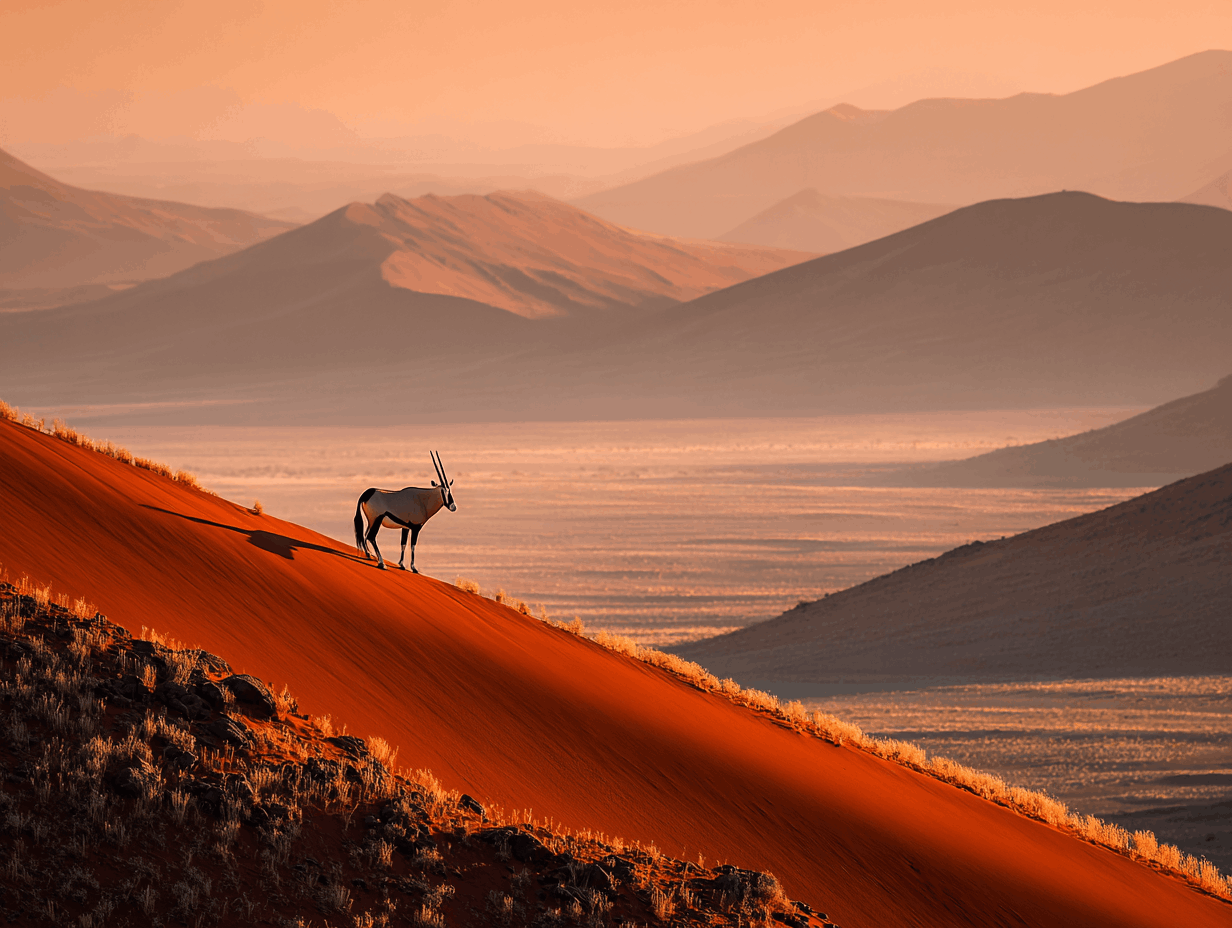
Wildlife spotting is a highlight too. Oryx are everywhere, those elegant antelopes with long straight horns, they look perfectly at home striding across the dunes. You might see springbok leaping in groups, or if youre lucky a black-backed jackal trotting by at dawn. Birds too, like ostriches or the occasional eagle circling high. Everything moves slow and deliberate, adapted to the heat and the thirst. Drive the gravel roads slow, pull over when you see something, binoculars help a lot.
For a quieter moment, visit Sesriem Canyon nearby, a narrow gorge carved by an ancient river. Walk down into it, walls smooth and striped, sometimes theres a bit of water in the pools at the bottom. Its a nice shady break from the open desert, and you can feel how rare water is here.
Getting to the Namib is pretty doable, fly into Windhoek first if youre coming international, then a short domestic hop or drive south. But many people fly direct from Johannesburg to Walvis Bay or even smaller airstrips closer to Sossusvlei, those links keep it affordable and cut travel time. Rent a 4x4 in town, roads are mostly gravel but well maintained, just watch for soft sand patches. Stay in lodges or camps inside the park for sunrise access, or outside for cheaper options, either way the nights are cold and starry.
Pack smart, lots of water always, hat and sunscreen because the sun is brutal, closed shoes for sharp rocks and hot sand. Layers for the chill after dark. Respect the rules too, stay on paths, no off-roading, the desert is fragile even if it looks tough.
The Namib doesnt give you easy wins, you earn every view, every animal sighting, every climb up those red dunes. But when you stand on top looking out over that endless red sea, or watch an oryx silhouette against the sky, it feels like youve touched something ancient and wild. This is desert adventure at its purest, raw and beautiful. Go venture in, chase those red sands, youll come out with stories and a bit of that Namib dust in your soul forever.